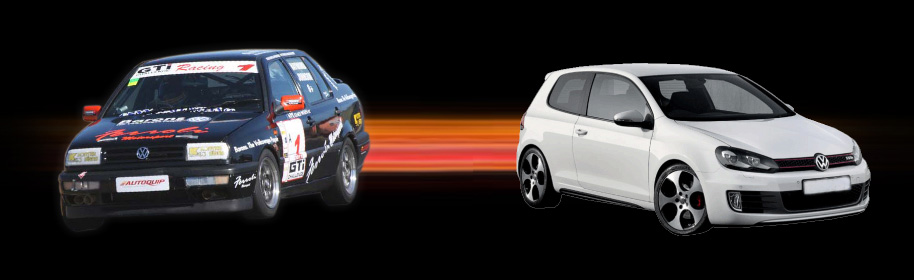
GTi Challenge Racing


2010 Rules – Draft v1.03


Regulations & Specifications for the 2010 Western Cape GTi Challenge


Committee             Chairman                            Lizelle Van Rensburg

                                Vice Chairmen                   Andries Van Eden

                                Tyre Rep                           Louise Ferroli

                                       Treasurer                             Siggi Zimmermann

                                Drivers Reps                      Peet vd Walt

      Chief Technical Officer          Dave Ingle

      Secretary                            Elke van Heerden


Class Reps:

Class A                               TBA

Class B                               TBA

Class C                               TBA


Technical Sub-Committee                

Chief Technical Officer          Dave Ingle

Technical Officer                  Giovanni Ferroli

Technical Officer                  TBA

Technical Consultant            TBA

General:

It is the driver’s responsibility to ensure that his/her car conforms to all the rules and regulations contained herein. Even if you buy an existing GTi Challenge car from someone, don't just accept that everything is legal on the car.The GTi Challenge Committee, including the Technical Sub-Committee, is not responsible for ensuring the legality of any car regardless of any inspections or checks that they may perform.


Only modifications and allowances detailed herein are permitted.  All components not referred to or not specifically mentioned in these Regulations will remain completely standard to factory specifications.  In other words – if it does not clearly say that you can do it – assume that you cannot!! Ignorance of the regulations will not be accepted as an excuse. If there is any uncertainty as to the legality of the modification, it is the responsibility of the competitor to seek approval in writing from the GTi Challenge Committee BEFORE the modification is done. If a competitor’s car has increased or decreased in power, it is his/her responsibility to hand a new dyno sheet to the Challenge Committee before the next race.


No tyres, stickers, race number or merchandise will be given to a driver unless the money has been paid.


NB: Competitors are instructed to note GCR 226 regarding “Interpretation of Regs and Specs

as per your 2010 MSA Handbook


All other regulations as per the 2010 MSA Handbook.

All novice drivers, to undergo driver’s instruction, before being allowed to race.

The Committee’s decision is final as to whether or not the driver is permitted to race.


1.        Definition – GTi Challenge, A class of racing that complies with the following regulations.


2.        Aim – To declare a GTi Challenge Champion


3.        Controllers – GTi Challenge Committee, WPMC


4.        Qualifications


5.        Championship Scoring

·         Should a class have fewer than 6 starters, points will be awarded on a sliding scale ie five starters 5-4-3-2-1; four starters 4-3-2-1; three starters 3-2-1 etc.


Procedures


(i)          Official entry forms to be submitted to WPMC by no later than close of business two weeks before race day. Any entry accepted after this date may be defined as a “Late Entry”.

(ii)          A “starter” is defined as a competitor who has participated in the official qualifying session listed in the regulations for the event or in one of the two heats, with one officially recorded timed lap. (Cars excluded from the days racing, as per CGR183, due to technical infringements will be deemed NOT to be a starter.)

(iii)         Should the race be red flagged:

-Refer SSR 43 (i) for race stopped after less than 2 laps

-Refer SSR 43 (ii) for more than 2 laps but less than 75% race distance

-Refer SSR 43 (iii) for more than 75% race distance completed

-Refer SSR 43 (iv) for no restart after Red flag

(iv)        There may be a qualifying session of at least 10-15 mins, in order to determine your starting position for the two races.  You will need to complete at least 2 official timed laps.  Your fastest time will determine your starting grid position for Race 1, with your second fastest time determining your grid position for Race 2. 

(v)         Cars that complete no laps during qualifying for any reason shall start both heats behind the last qualifying car in the same class sorted by championship order, number of races completed or car number, whichever is first applicable.

Cars that complete only 1 qualifying lap shall start the second heat behind the last qualifying car in the same class sorted by championship order, number of races completed or car number, whichever is first applicable.

(vi)           All cars have to enter the pit road via the weigh bridge after any officially timed session. Failure to do so will result in driver being excluded from that session. Any exclusion from qualifying, for any reason, shall be the same as if the car completed no timed laps. Rule v) to apply.

(vii)       If for whatever reason, the Stewards of the Meeting/Clerk Of The Course (COC), determine that no timed qualification session is possible:

(viii)         Drivers must complete at least 75% of the full race distance in order to qualify for position points.  Both races will count for points, with Trophies being awarded for Overall positions for the two races combined.

(ix)       There will be approx 10 Rounds consisting of 2 heats each subject to the official calendar published by WPMC. Away races will count for points as well.

(x)          Class points may not be transferred from one class to another. The Champion will be the competitor with the highest number of points scored overall at the end of the racing season, irrespective of class.

(xi)       Should 2 or more drivers end on the same points – Refer GCR229.


6.      Bonus Points:  Bonus points will be awarded for the following:

(i)        Race Appearance – 1 point per race meeting (Driver must complete at least 1 officially timed lap)

(ii)        Fastest lap – 1 point per heat, per class

·       Subject to there being no official qualifying session

·       There must be 3 or more starters in that class

(iii)       Pole Position – 1 point per race

·       Subject to there being an official qualifying session

·       (Driver must qualify at the front of his/her class)

·       There must be 3 or more drivers qualifying in that class

(iv)       Lap Record – 1 point (Driver breaks the record for the fastest lap in his/her class, during a heat)

** Lap Records will be reset:

 (v)        GTi Challenge Meetings – 1 point per meeting.

            All drivers who are in possession of a GTi Challenge race number and are paid up members of the GTi Club are deemed to be competing in the series and are required to attend all meetings called by the GTi Challenge Committee (whether they competed in the last race or not). A driver may excuse himself/herself from a maximum of 2 meetings (and still earn the points for those meetings) per year. Apologies may only be given to a committee member before the start of the meeting. Out of town drivers (or an allocated representative) must attend at least 4 meetings during a year.


7.   Penalty Points: Points will be deducted for the following:


A.         Classes:

There will be 3 points scoring classes:


CLASS A:  This section will be split into 3 sub classes, for the sake of power to weight calculations:

CLASS B: Modified 1800 8v – to a max of 115kw (up to 200nm)

CLASS C: Modified 1800 8v – to a max of 95kw (up to 180nm)


Non-points scoring classes:


CLASS P:  All current spec VW Cup / Polo Cup cars, running as per the current Polo Cup specifications.


Invitational drivers will be allowed to compete at the discretion of the GTi Challenge Committee (non

scoring).


B.         Eligibility of Cars:


(i)            Cars and drivers will register with the GTi Club of SA and are subject to pre-race inspection

before race day, to determine its class.

(ii)           No car may race without carrying the full set of sponsor’s decals. Stickers that are supplied by the committee must be ordered at least 1 week before the race day. Stickers ordered after that date will be charged at double the normal rate.

(iii)          Cars entering by invite in Classes A/B/C/P, do not qualify for points, or prize monies, but Trophies will be awarded on National invitation.  Traveling monies for visiting drivers, or for away races, will be awarded at the discretion of the GTi Challenge Committee.

(iv)        Cars not meeting the safety standards judged by the GTi Challenge Technical Committee will not be allowed to race.


(v)            Cars must be run on the official Dyno before being allowed to race in their Class. The car’s power must be the same or less than the maximum kilowatts for that class or class division as per Rule A.

(vi)        Cars found to be underweight after any officially timed session will be excluded from the results of that session.

 (vii)        The GTi Challenge Committee reserves the right to request that any car at random be inspected at any time.

(viii)         No spare or T cars allowed.


C.      Driver Conduct:


Drivers will abide by MSA regulations at all times.  No driver shall drive or conduct himself in a manner that brings the sport, club, sponsors or series into disrepute.  The GTi Challenge Committee will not tolerate any abuse or accusations from a driver’s team, family or supporters.  This could result in the driver being excluded from the results from that day’s racing.


It is hereby confirmed that the Clerk of the Course for GTi Challenge and (or) Challenge Committee is empowered to make use of yellow and red cards in connection with driver discipline and conduct, subject to the following:

·      A yellow card shall have the effect of placing a competitor's driving conduct 'under observation' for the following four (4) heats (excluding the race day when card was issued), forming part of the championship. Penalty points as per rule 7 will apply

·      A competitor racing 'under yellow' shall be required to prominently display a supplied yellow decal on both rear windows of his/her race car at all times during the affected events.

·     If a competitor is found guilty of an offence while 'under yellow', he/she may, following a hearing, be issued with a red card.

·     The effect of a red card is to bar a competitor from taking part in the next race meeting forming part of the championship.

·     In the event of the COC and/or Challenge Committee deeming a first offence to be sufficiently serious so as to warrant the imposition of an immediate red card, they shall be empowered to take such action.

·     'Card decisions' need not be made at an event. The COC and/or Challenge Committee may await video footage (or other suitable evidence) following the event before making a decision.

·      Where a 'card decision' is made on the day of an event, the affected competitor shall NOT have the right of protest to the Stewards of the Meeting (and the right of subsequent appeal).

·      Where a 'card decision' is made between events, the affected competitor shall NOT have the right of    protest to the Stewards of the Meeting (and the right of subsequent appeal).

·      The decision of the COC and/or Challenge Committee is final.

·      Refer SSR’s 46 to 66 (where applicable)


(i)      Bumping and (or) pushing of other vehicles on the circuit is not allowed and any drivers found doing this will be penalized by the COC in terms of GCR157. The COC may consider infringements at previous events which resulted in penalties being imposed, when imposing penalties under this section.

(ii)      Any competitor that disadvantages another competitor by bumping said competitors vehicle, even unintentionally, which results in the loss of place(s) during the race will, at the discretion of the COC, generally be penalized so as to finish behind the competitor that was disadvantaged. More severe penalties will be applied to repeat offenders.

(iii)     The vehicle ahead of any other vehicle in any “train” of two or more vehicles on the circuit may only change direction once in a straight-line from the exit of one corner up to and including the entrance to the next corner.

(iv)     When attempting an overtaking maneuver coming into a turn, at the end of the braking area, the front bumper of the overtaking vehicle must be past the “B” pillar of the vehicle ahead before entry to the turn.

- If this is not the case then the overtaking vehicle must back of and allow the vehicle ahead to take the racing line through the corner.

- If the bumper of the overtaking vehicle is  past the “B” pillar of the vehicle ahead, the lead vehicle must take a line so as to allow both vehicles to successfully negotiate the corner and exit.


·     Drivers who are black flagged during a race, for any reason will receive an automatic Yellow Card. Refer to rule 7.


D.            Sponsors Decals:

Refer to GCR’s 246 and 249. The sponsor and series decals, which each vehicle must carry, will be identified as reserved areas. The following areas of all race cars are reserved for the diplayof series sponsor’s decals. No personal sponsor’s decals may be placed in these areas unless there is no series sponsor allocated to that position at the beginning of the racing year. Reserved areas for any sponsors received during the racing year will be decided on by the majority vote of all drivers racing in the series at that time.

·          Top of windscreen

·          Top of rear window

·          Front number plate area

·          Rear number plate area

·          Front right and front left doors

·          Any other area as decided by the committee from time to time

·         All series sponsor decals remain the property of the GTi Challenge. 

·         Numbers are for driver’s account. 

·         The first set of series sponsor decals are for sponsors & GTi Challenge accounts. Decals are not to be tampered with.

·         Replacements are for driver’s account. 

·         Failure to comply with this regulation will result in the loss of points for the meetings in which the infringement occurred.


E.    Engines General:

(a)     On board data collection systems and sensors are not permitted. Only timing equipment is allowed.

(b)       Oil Coolers and Spark Plugs are Free

(c)     The Breather system must discharge into a transparent catch tank or catch tank with an oil level indicator of 2 litre minimum capacity and must be empty at the start of practice and heat.

(d)     Sumps may be altered but remain wet sump.

(e)     Sump plugs, oil filters, radiator filler cap, oil filler cap, gearbox filler / plug must all be wire-locked.

(f)      The position of the radiator may not be changed, but larger or smaller VW radiators may be fitted. This is to be approved by the technical committee.  No artificial cooling of radiators will be allowed e.g. water spraying etc.

(g)     Only standard VW Fuel tanks allowed NO Fuel cells.

(h)     Alternators must be operative at all times, but bigger pulleys are allowed.

(i)        Batteries to remain in standard mounting position in engine bay. Additional “hold down” clamp bracket to be fitted to battery.

(j)      Engine mounting points must remain in standard position.  All classes may replace std material with Polyurethane or similar material.


F.    Exhaust Systems:

Must comply with GCR 245 and exit at the rear of the car, in the standard position.


G.   Cylinder Blocks:

Only VW mass-produced blocks available through recognized commercial outlets are permitted.


H.   Induction Systems:

Additional air pipes may be used to supply the engine air intake with cool air. However, NO artificial cooling of induction systems / intake manifolds, such as the use of dry ice, is allowed.

Any VW fuel rail and Injector may be used. The Fuel rail may be modified to accommodate an adjustable fuel regulator.


CLASS A:         45 Side Draughts, Throttle Bodies or VW Fuel Injection.

Slide Throttle Bodies are not allowed.

CLASS B:         VW fuel injection or carburetor. Only standard throttle bodies allowed for both MP9 & K-jet models. Inlet manifolds may be matched up to 80mm into the port of the manifold.

Carburetors allowed are Keihin, 2B2, 36DCD or 40mm Single or twin Side Draft (Choke Size – 34mm).

CLASS C:         VW fuel injection or carburetor. Only standard throttle bodies allowed for both MP9 & K-jet models. Inlet manifolds to remain standard.

Carburetors allowed are Keihin, 2B2 or 36DCD.


I.                    Management Systems:


CLASS A,B&C: MP9 control box with any locally manufactured piggy back or the following stand alone South African made management systems may be used: Gotech Mfi, Gotech Pro, Dictator Standard, Dictator 60-2, Dictator wasted spark. No multiple map management systems allowed (e.g. Uni-Q)


J.       Pistons and Rings:


CLASS A:         Pistons and bores are free.

CLASS B&C:    Only GTi Challenge Technical Committee approved standard replacement pistons may be used – *1,5mm Max oversize is allowed. Pistons may not be modified in any way except to remove metal below the lowest point of the gudgeon pin position for balancing purposes.  No machining marks are allowed on the piston tops.  At least one piston must remain unmodified.

                                *Only if you use the 2.3 kombi piston, are you allowed to machine the step on all the pistons


K.   Piston Heights:

All Classes:       Pistons heights free & head gaskets free.


L.      Connecting Rods:

CLASS A:         Free.

CLASS B/C:      Standard unmodified VW. One small-end and one big-end must remain unmodified.  May not be lightened but may be balanced.


M.   Crankshaft:

All Classes:   Only VW mass-produced crankshafts available through recognized commercial outlets are permitted. May be balanced and reground. No knife edging or lightening of the crankshaft is allowed except for drilling and grinding of main webs for balancing purposes.

CLASS A:         Standard 2.0L crank – max stroke 92.8mm

CLASS B/C:      Standard 1.8/1.6L crank - max stroke 86.4mm


N.   Flywheel and Clutch:

CLASS A:         VW, Competition or sintered (button) clutches may be used.  Flywheel may be lightened & balanced. Only standard VW production pressure plate may be used, and Strengthening of Diaphragm permitted

CLASS B/C:      Standard replacement clutch kits only.  Flywheel may be lightened & balanced.

** All classes may use standard 16v pressure plates


O.   Cylinder Heads:

Only VW mass-produced cylinder heads available through recognized commercial outlets are permitted. Vernier Gears are allowed in all classes. Competition valve springs only allowed in Classes A&B.

CLASS A:         Free – All VW 8v, 16v or 20v.

CLASS B:         Only 8v hydraulic heads allowed.

Cylinder heads can be modified, ported and run larger valves.

Minimum Cylinder Head height may not be less than 132mm.  MP9 minimum head height is 131mm.

Only standard VW cam followers may be used.

CLASS C:         Only 8v hydraulic heads allowed.

Cylinder head ports must remain standard as per factory spec, however 3 –angle valve seats may be cut.

Only standard VW cam followers may be used.


P.   Camshafts:

CLASS A:         Free

CLASS B/C:      Maximum 288 degree hydraulic cam allowed (max lift - 11.7mm).


Q.   Compression Ratios:

CLASS A/B/C:  Free


R.   Gearbox and Diffs:

·              Only VW mass-produced casings available through recognised commercial outlets are permitted.

·              Only standard VW production gears allowed.

·              Strengthened after market 5th gears of “091” ratio allowed which may only be purchased from GTi Challenge Committee

·              No Limited Slip Differentials.

·              Short shift gear linkage allowed.


CLASS A:         Maximum 4.2 diff ratio allowed.

CLASS B&C:    Maximum 3.94 diff ratio allowed.


S.   Suspension:

(a)        Top shock turrets must remain in standard position.

(b)        Track width, ground clearance and spoiler minimum heights as per specification sheet.

(c)        Standard steering rack and standard mounting positions only.

(d)        Spacers may not be fitted between ball joints.

(e)        Polyurethane bushes permitted for all classes.

(f)         Pick-up points on body / chassis may not be changed or moved.

(g)        Shocks / uprights may be slotted to achieve camber settings only.

(h)        Ball joints and their mountings may not be slotted.

(i)         Top and bottom stress bars are allowed in all classes.

(j)         Steering rack mounting on Golf/Jetta MK1 may be reinforced.

(k)        Only locally available and serviceable shocks may be used (see below).

(l)         Struts and uprights and hubs not interchangeable between different models - i.e. Mk1 with Mk1, Mk2 with Mk2, etc.

(m)       Rear axel not interchangeable between different models.

(n)        Rear axle maybe stiffened.


CLASS A:         Shocks, shock mountings & springs are free - ride Heights may be adjustable.

Caster plates allowed - max offset 40mm.

Standard lower control arm & ball joints; mounting positions to remain unchanged.


CLASS B:         Strut Casings may be shortened.

Only standard lower control arm and ball joints are allowed.

Coil over suspension allowed but non adjustable for compression and rebound.


CLASS C:         Strut Casings may be shortened. Springs are free. Standard spring seats to remain in the standard position of a factory style VW shock. Coil over springs allowed with appropriate non-adjustable adaptors to ensure proper fit. Spring seat heights:

                        Front suspension leg / shock absorber: From the top of the mounting ears to the bottom of the spring cup – minimum 153mm.

                        Rear suspension leg / shock absorber: From the centre of the bottom mounting bolt to the bottom inside of the spring cup – minimum 178mm.


ALL CLASSES:             Any brand of shocks allowed (excluding Penske) that comply with the above rules


T.   Brakes:

Only VW mass-produced brake calipers available through recognized commercial outlets are permitted. Imported/other after market brake discs allowed (powerbrake, ferodo ds etc.) Adjustable brake balances allowed, but may not be adjustable inside the car while in motion. Only GTi Challenge Committee approved brake pads are allowed.


CLASS A:         Maximum diameter - 288mm.

Booster may be removed. Master Cylinder's free but must remain VW product. Standard VW production rear disks & calipers allowed.

CLASS B:         Maximum diameter - 256mm.

Larger volume VW Production Master Cylinder may be fitted.

Rear brakes must remain standard as per model.

CLASS C:         Maximum diameter - 239mm.

Master Cylinder to remain as per factory spec.


U.   Bodywork and General:

(a)        Only locally produced body shells (2/4 door) will be allowed.

(b)        Only VW spoilers and aerodynamic devices available for road use may be used (can not be interchanged between models, i.e. Mk1 with Mk1 or Mk2 with Mk2.).

(c)        Commercially available air scoops allowed, brake cooling ducts may be fitted, but must not protrude beyond the silhouette of the car.

(d)        The width of the original body shell may not be altered/increased in any way and the top of the tyre may not protrude outside the body perimeter.

(e)        You may not cut the rear bumper and apron, wheel well to remain standard (see j below)

(f)         Chassis may be seam welded. Inner fender lips may be rolled or removed. Outside lip to remain standard as per factory spec (no flare).

(g)        Outer headlights must remain in working order, but the inner lights may be removed for cooling. 

(h)        Spot light holes must be covered by mesh

(i)         On Mk1 (2 Door) models, rear passenger windows, may be replaced with Perspex/lexen should glass not be available. 

(j)         Mk1/2/3/4/ 5 & Polo 1/2 may remove rear windows and hatch window and replace with Perspex/Lexen ONLY if it can be demonstrated to the satisfaction of the technical committee that the weight limit cannot be achieved. such approval must be obtained in writing before replacement.

(k)        Top valance at wiper motor may be removed for fitting of side drafts.

(l)         Material may be removed from interiors of Golf/Jetta MK1/2/3/4/5 and Polo 1/2, only if it can be demonstrated to the satisfaction of the technical committee that the weight limit cannot be achieved. such approval must be obtained in writing before removal. drivers door to remain standard including working window winder mechanism; only door panel may be removed.

(m)       Racing seats and race steering wheels may be fitted. 

(n)        Racing Harness is Compulsory. 

(o)        Roll cages in compliance with GCR 239 are compulsory.  Roll Cages may be bolt in, but must have a least 6 mounting points.  FIA Specs allow either 50x2mm or a minimum of 38x2.5mm bar size.  Bars running from the roof to floor must be continuous with minimum bends & NO welding points.  Roll cages may protrude the fire-wall and connect to the front shock turrets. 

(p)        Driver’s side-impact bar compulsory!! 

(q)        Dashboard must remain standard apart from localized cutting for roll cages. Any form of instrument cluster may be used and additional gauges may be fitted.

(r)         Front Wipers and motor compulsory and in working order.

(s)         Bonnet clips & cut-off switches must be fitted (as per white book). Driver’s side window net recommended but not compulsory.

(t)         No towing brackets to protrude beyond the front bumper.


** All weight reductions or material replacements to be approved in writing by the GTi Challenge Committee.


V.   Wheels and Tyres:

All Classes:      No Chrome plated or split rims allowed. Wheels to a max of 15” x 7” only. Standard wheel bolts may be replaced by studs.  Wheel spacers are permitted but must have location spigots to match wheels being used.

All Classes:      Dunlop D01J - 195/55R15 “S” or D01J - 195/50R15 “S” or DZ02G 195/55R15 or DZ03G 195/55R15 compound only permitted.

Only 10 new tyres per year will be permitted.


W.  Fuel:

As per GCR 240 (also refer MSA General Circular 1/2006-128915/144, 3/2006-129813/144, 4/2006-133223/144, 5/2006-133991/144) In terms of GCR240  1/2006-128915/144, GTi Challenge drivers are allowed to increase the octane of Unleaded fuel via commercially available lead-free “octane boosters”, with the max RON =102.6 – No Funny Juice!!!! No artificial cooling / freezing of fuel allowed.


X.   Specification Sheet


(A) – Heights/Widths

Ground Clearance: 135mm minimum from the center of the bolt on the front inner lower control arm (standard mounting point).  Spoiler minimum height 85mm.  (With driver in the car)


Track Width:

Model

Front (mm)

Rear (mm)

Golf / Jetta Mk1

1690

1620

Golf / Jetta Mk2

1740

1680

Golf / Jetta Mk3

TBA

TBA

Polo 1 Classic

1680

1630

Polo 2 Hatch

1680

1630


The measurement will be taken between the two tyres, from the outer edge of the wheel rim, on the vertical point closest to the ground.


(B) – Power to weight

CLASS A:  This class will run on 3 weight divisions, to get an ideal power to weight figure of around 138.

·         A3:       Min 910kg:        up to a max of 125kw and up to a max of 200nm

·         A2:       Min 980kg:        from126kw to a max of 135kw and up to a max of 215nm

·         A1:       Min 1050kg:      from 136kw to max 145kw and up to max 230nm

CLASS B:                     Min 950kg:        up to a max of 115kw and up to 200nm

CLASS C:                     Min 920kg:        up to a max of 95kw and up to 180nm


(b.1) The above weights are for Driver and Car combined.

(b.2) Cars will be weighed after qualifying and after both heats.

(b.3) Additional weight may only be added within the confines of the passenger or hatch compartment.

(b.4) All ballast attachments must be approved by the GTi Challenge Committee or MSA Scrutineers.

(b.5) A 20kg penalty will be awarded to the winners of each class after each heat, to a max of 40kg. Weights will be supplied by the committee (at the beginning of the year) and must be added, irrespective of whether the car is already overweight or not. The minimum weight of a car shall be the base weight as per (B) above plus the penalty weight.

(b.6) Class Reps will be responsible for tracking and making sure the Class weights are available on race days.

(b.7)Should you lose, 20kg will be taken out and given to the new winner. If you had 40kg and lose again, the other 20kg will also be removed and awarded to the new victor.

(b.8) All drivers will purchase the compulsory bracket for weight penalties, as supplied by the Challenge Committee and must be secured in the front passenger seat area with the weight secured to the bracket.


* Specifications for new model cars will be accommodated as they are built ie  New Beetle, Golf 4 and 5 as well as New Polo (Hatch and Classic)


Y.   Protests / Technical Checks:

- All cars will be run on the GTi Challenge designated dyno before they are allowed to race.  The dyno owner, committee and car owner will be given copies of the results.  In order to protest a car/driver, a fellow competitor must fill in a “Protest Form” within  ½ hour of the 2nd Heat of the day.  These forms will be available at the CoC office.

- The protest is to be specific ie Motor, Power, Gearbox, Suspension or Brakes, Bodywork etc.

- The Car(s) in question will have their bonnets locked and will be locked away in a designated area at the race track. 

- Checks will be done at an agreed venue and time. Should the car(s) be illegal and the fault be seen as an unfair advantage, the GTi Challenge Committee will exclude the driver(s) from the results for the day and no points will be awarded. If the car is found to be illegal after qualifying or 1st heat, it will not be allowed to continue racing on the day. Fuel may not be added, so drivers are required to finish a race with at least 5 Litres of fuel left in the tank. Cars may only be transported by trailer to the GTi Challenge designated dyno for checking unless otherwise agreed by the Technical Sub-Committee. The car(s) will be given 2 runs, with the average taken between the two.  Cars will be allowed a 3% tolerance (Kilowatts and Torque on the flywheel) on the applicable maximum Class (power & torque) to weight figures. If the car is over by more than 3%, he/she will be excluded from the results for that day’s races.


Technical Checks:

For Technical Checks by the GTi Challenge Technical Committee, the same procedure will be followed.  If the checks are too difficult to be done at the track, the cars will be locked away and an agreed time will be arranged.  For power checks, all drivers will meet at an agreed time.

   i) The GTi Challenge Technical Committee reserves the right to request that any car, at random be checked.

   ii) The Technical Committee reserves the right to mark and seal the motor, as well as ECU’s and On Board ports (for laptop interfaces).

   iii) Should any of these seals/markings be tampered with, the driver will be excluded from the day’s results.

   iv) If there is any uncertainty as to the legality of potential modifications affecting these markings/seals, it is the responsibility of the competitor to seek approval in writing from the Technical Committee.

   v) Failure to do so, will result in exclusion, should these markings /seals be inspected (see i above)


Z.   Ceramic coating:

ONLY exhaust manifolds may be ceramic coated.


For further information or clarification contact:

(Chairperson)     Lizelle              Cell: 072 536 6255         or email:  zelvren@absamail.co.za

(Vice Chairman) Andries Cell: 082 874 2344         or email: andries@gticlub.co.za

(Chief Technical Officer) Dave      Cell: 082 939 9072         or email: davedice@hotmail.com


GTi Challenge 2010 Rules Updates:

Date

Version

Updated By

Changes

25/12/09

1.01

Howie

2010 Comm included.

04/01/10

1.02

Howie

2009 MSA Handbook = 2010, Wheel width 15”x7.5” changed  15”x7”

22/01/10

1.03

Howie via Comm

2.3 Kombi pistons, General, Protests/Technical, Tyre Rep